LORE PRIMER
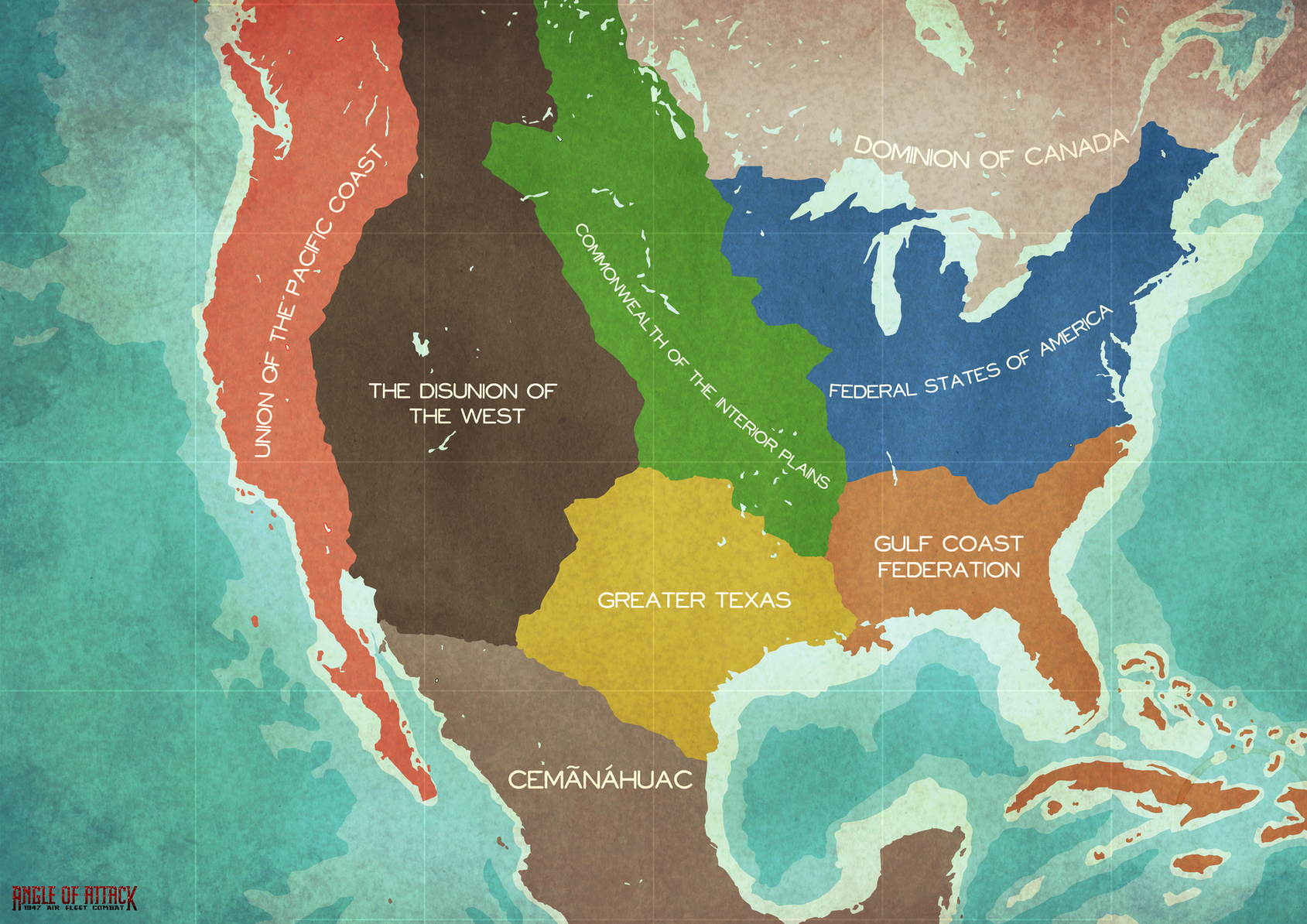
Map of Greater North America, circa 1947
FACTION OVERVIEW
This section provides an overview of each faction, their political and military function, and any sub-fleets or minor nations aligned. In Angle of Attack, a faction is defined as the playable airship fleets with associated aircraft that are united into one force a player can deploy on the tabletop. This overview does not provide a deep dive into the background, how their history unfolded, or the characters that drove that history. In cases where more than one nation comprises a faction or more than one fleet supports a nation, each fleet has a section specifying differences.
Federal States of America
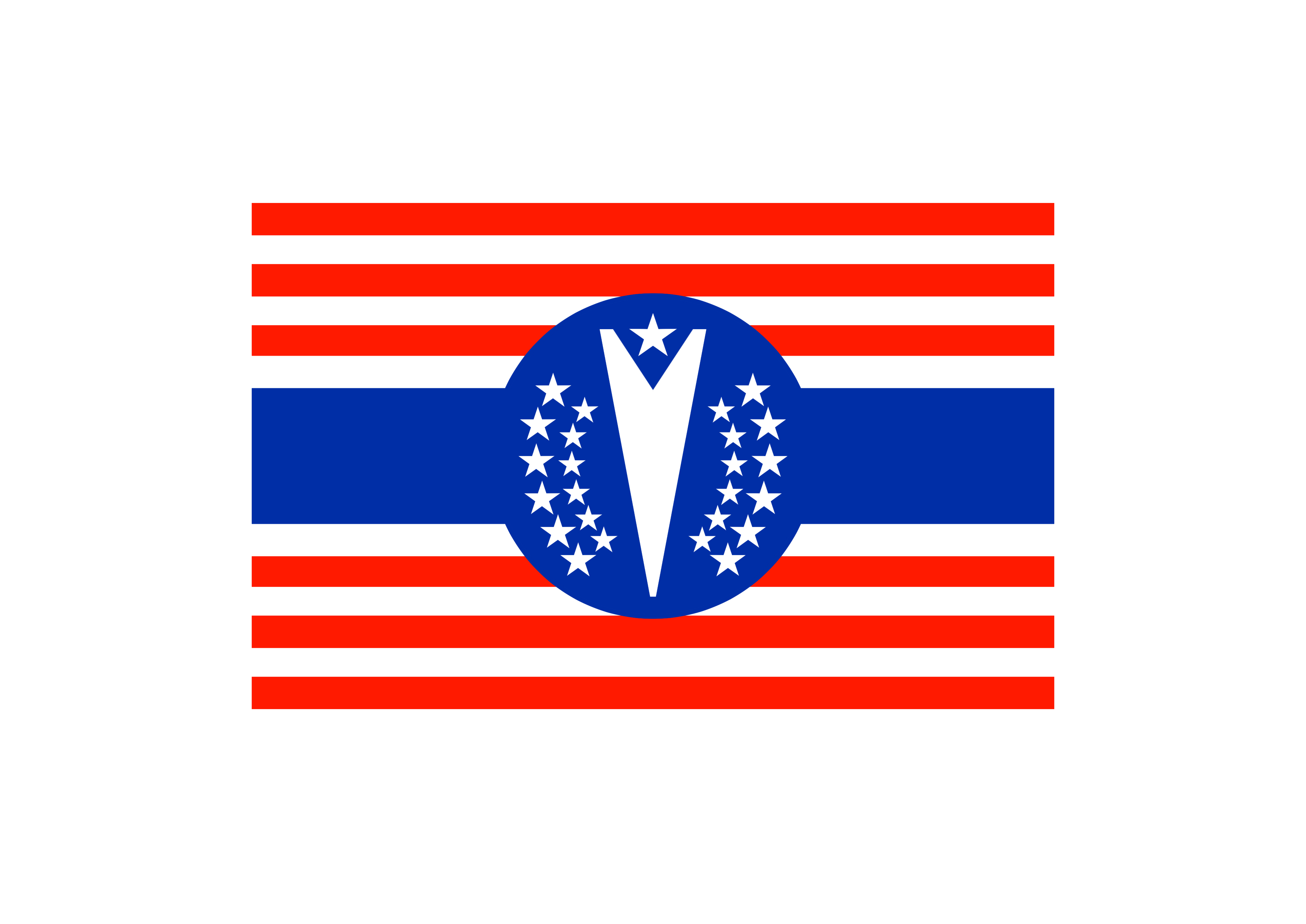
The Federal States of America is what remains of the United States of America, and is often called the Colonies by other nations that emerged from the breakup of the United States. Their airships and aircraft are influenced by both the United States Navy airships and the airships of the British Empire. This has led to a blended doctrine of numbers and interchangeable designs and parts. The FSA uses the same engines on most of their aircraft and standardizes armor layouts across different classes of airships. Their Airship designs are purpose built to accomplish specific roles. These traits allow designs to be streamlined and easier to produce in numbers. Individually, their ships are incapable of succeeding in all roles on the battlefield, but as a group, every class fulfills its specific role, allowing each ship to focus on their specialty, such as anti-air defense or capital ship offense.
The FSA tends to halt production of older designs in an attempt to continuously improve them, as demonstrated by a brand new line of airships called the A-series. With a focus on standardization and streamlining processes, the Federal States of America Air Forces deploy fewer individual types of ships and aircraft than other nations, but equivalent numbers to a nation with great resources. This allows the FSA to remain largely independent of larger nations, despite a diminished size and strength. The goal of the Federal States of America is to reunite the United States once again, and they are in active conflict with the Alliance Against Reunification, which they call the Rebelling States.
Alliance Against Reunification
This alliance of the Republic of Greater Texas, Gulf Coast Federation, and The Commonwealth of the Interior Plaines forms the main opposition to the Federal States of America reunification plans. The Gulf Coast Federation contains the main ship and airship yards, followed by the Republic of Greater Texas. The Commonwealth, while working to catch up industrially, controls large natural resource reserves, putting it on an equal but not equivalent footing with the other two nations of the Alliance. The Alliance’s military is supplied by corporations that now span across the Alliance, leading to theories about how the Alliance is less of a reaction to the aggression from the Federal States and more of a desire for the corporations to keep their customers dependent.
The three member states are fully independent of each other politically and maintain their own currencies; however, economically and militarily, two corporations known as Todd Combined Shipyard Company and Boyd-O'Connor Corporation have bound them into what is effectively one economic block. Their militaries may function individually, but most of their Airships are supplied by these corporations. Typically, these designs sacrifice armor and speed for ease of maintenance and greater firepower. Variants of the common airships demonstrate this by generally slower speeds than ships of an equal class, but they do tend to be resilient. Each of the three member states of the Alliance customizes their individual airships, but tend toward a multi-role approach in function, which allows individual ship proficiency in a variety of battlefield tasks.
Republic of Greater Texas
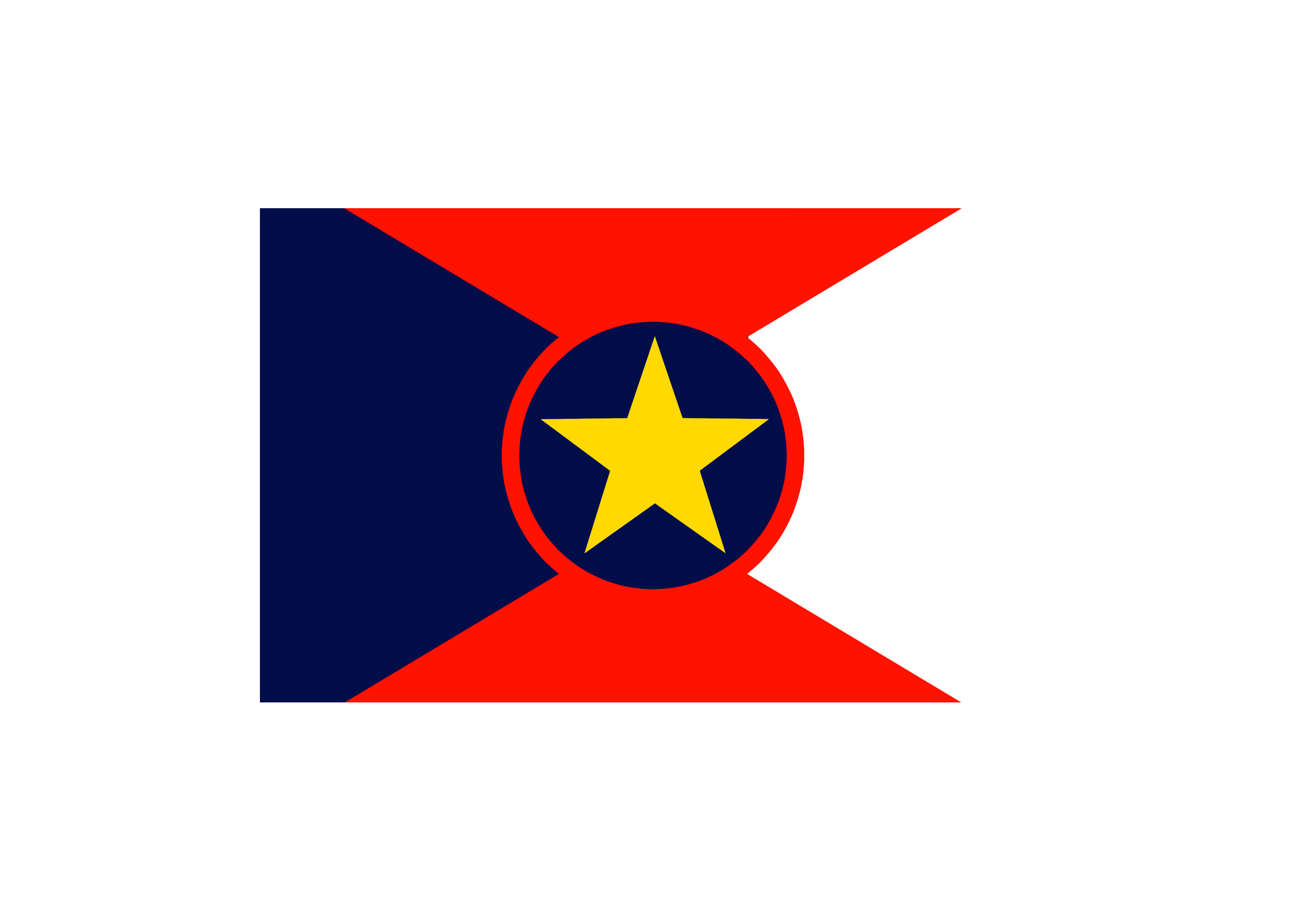
Often called simply Greater Texas, or Texas, this nation began as the State of Texas before expansion beyond its borders in all directions. It is the oldest of the three members of the Alliance Against Reunification, as Texas was the State where the crisis that ended the United States of America began. Of the three allies, the Republic of Greater Texas fields the most offensive forces. The Greater Texas Air Force focuses on larger formations with standard flight “wings” consisting of 3-4 Frigate-class airships and a pair of Destroyers with another pair of Cruisers. Relying on mass battery bombardment, these large airship “wings” allow RGT forces to beat back even the heaviest enemy resistance. Until recently, the majority of these ships were venturing into the “Wild West” to hunt pirate fleets and help secure trade deals with the Pacific Coast and overseas partners. This has led the Republic of Greater Texas to have the most aggressive and adventurous Captains in the Alliance. Some of the actions of these Captains led to a Greater Texas war with Cemānáhuac, resulting in claimed lands south of the Rio Grande.
The Gulf Coast Federation
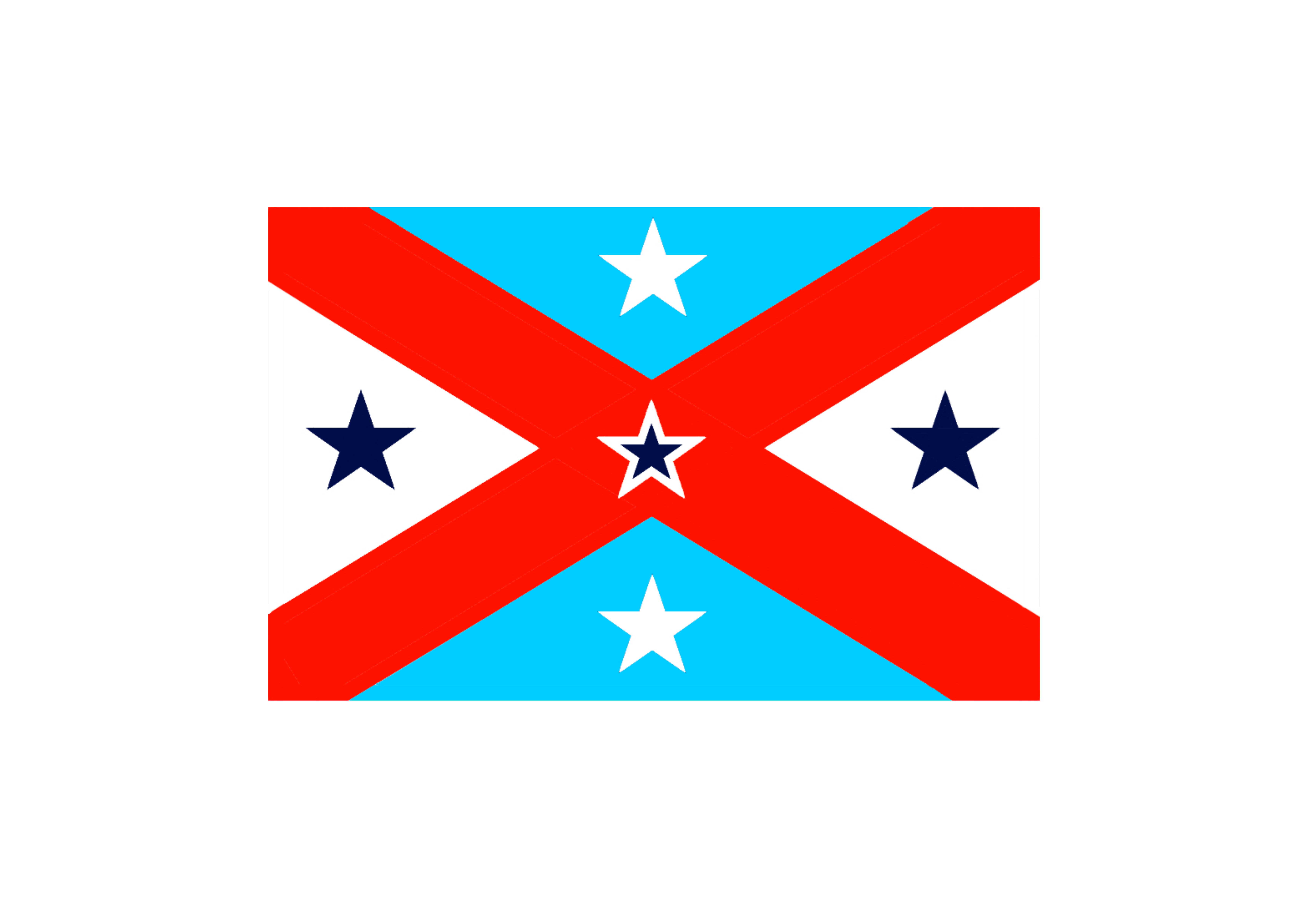
Often shortened to Gulf Coast, it has the largest formal Navy in the Alliance due to maintaining the Miami Fleet Yards. Likewise, with the second-largest of distances to cover, their Navy is built around endurance and is the most professional of the three. Like the Federal States of America, they model their airship Navy off of the former United States Navy. However, where the Federal States of America has blended in both Royal Navy and Royal Air Force concepts, the Navy of the Gulf Coast Federation has remained closer to the composition and doctrine of the former United States Navy, focusing on power projection and coordination of smaller groups. Their tactics skew toward strike forces and smaller strike fleets that can hit convoys or scout deep into the Atlantic Ocean, where surface ships can refit them, prolonging their mission time. Of the three Alliance members, the Gulf Coast Federation is the most diplomatic, often protecting trade into La Mancomunidad from various raiders and air pirates alike.
The Commonwealth of the Interior Plains
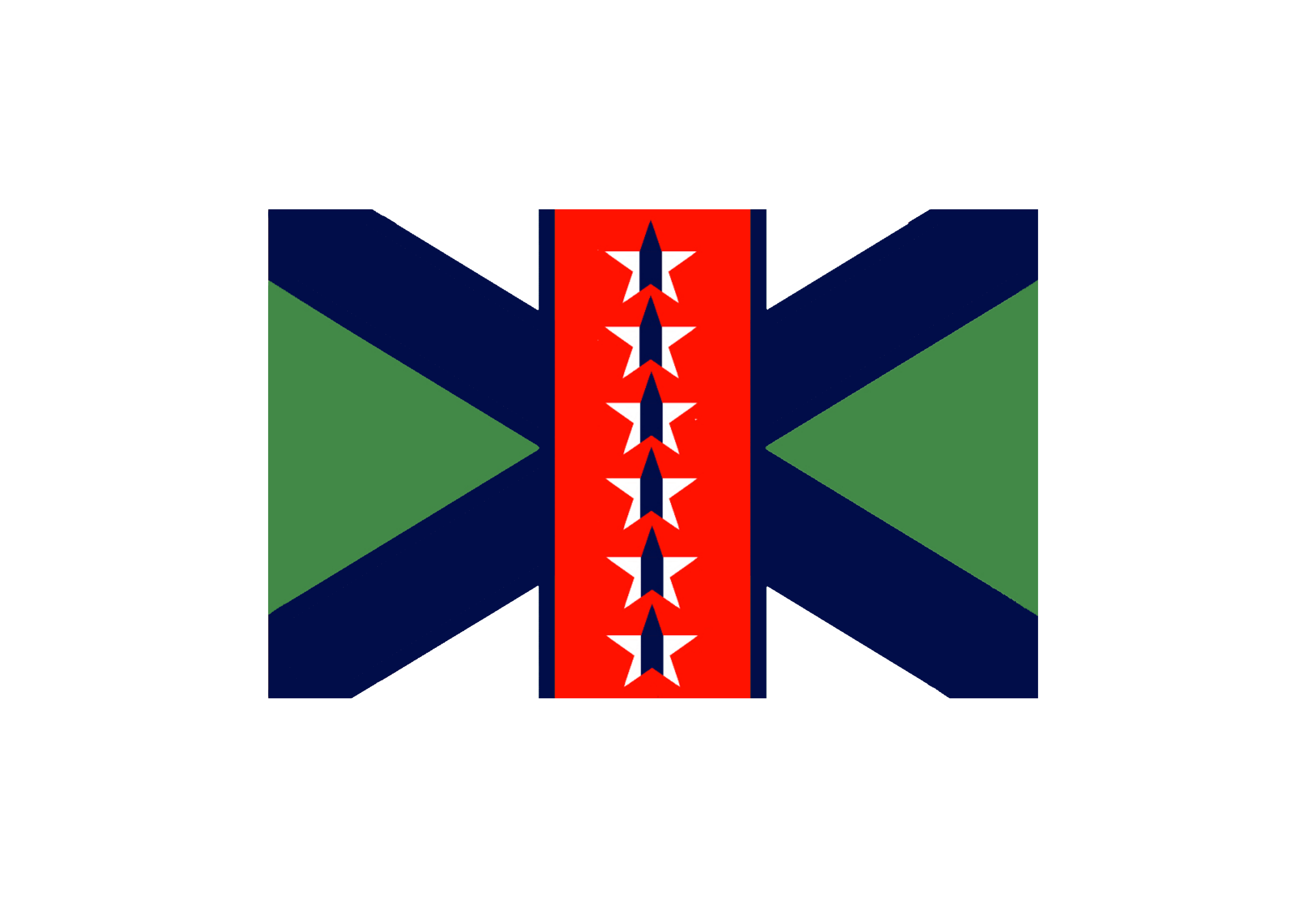
Called the Commonwealth or the Great Prairies, this agrarian nation spans from the Arkansas River to the south, with the northern border north of the 54th parallel. This incorporates parts of Canada to enable raw resource extraction and farming of the Alliance. Its Navy is largely focused on dealing with raids from neighbors trying to disrupt the internal supply lines that feed the factories in both the RGT and the GCF. Their Navy has adopted Q-Ship-style airships to deal with these raiders and has some of the most promising armed merchant designs. However, the bulk of their fleet is composed of older British and American hulls bought from their neighbors, requiring extensive refit and modernization into more modern forms. In direct combat, the Commonwealth forces rely on heavy use of ground-based aircraft to strike at enemy fleets before they are in range, weakening them and giving friendly airship forces a fighting chance.
The Union of Pacific Coast Soviet Socialist Republics
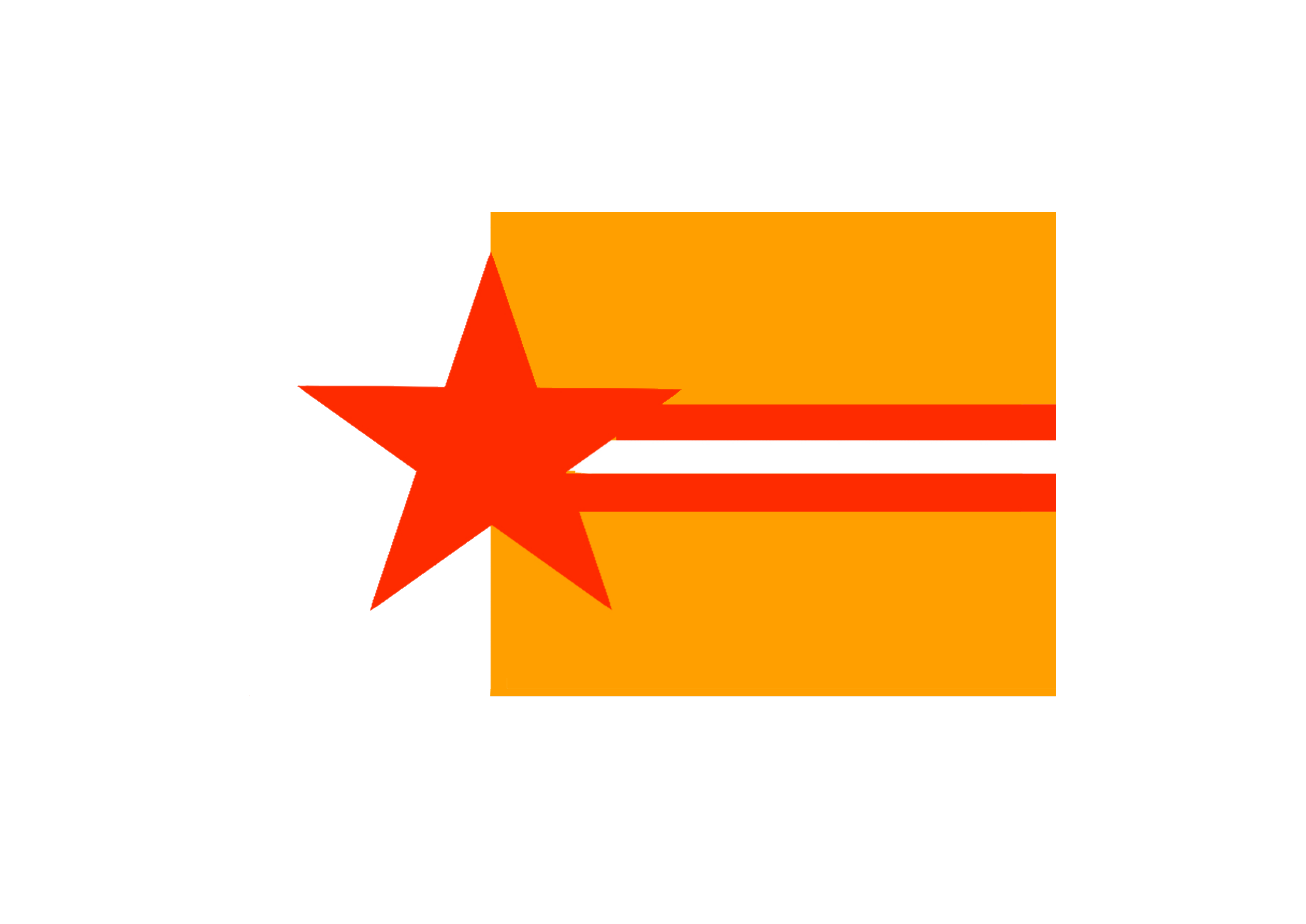
Often shortened to the Union of the Pacific Coast, or the PC-Union, this communist nation is largely separated from the rest of the nations in North America due to the lawless zone created by the Rocky Mountains. After the death of Stalin in Budapest, the remnants of his government were defeated in the ensuing civil war and escaped to Alaska. They easily took over Alaska, and as the United States fell into crisis, they marched south, using the chaos to take control of the Pacific coast. When Cemānáhuac launched a raid into California, they advanced further south, taking all of Baja. When a ceasefire came into effect, they had lost a majority of their industrial leaders. Thus, while they have a promising industrial base, the genius has left the Union, leaving them in a state of technological stagnation. This stagnation has led them to cannibalize and upgrade anything they can, leading to some interesting airship designs. While not directly in any large-scale conflict with their neighbors at this time, the PC-Union structures its forces into raiding parties that strike at weak points. They engage in trade with Pirates and city-states to their east, as well as clash with them in smaller battles over resources, territory, or trade disagreements.
Disunion of the West
Not a nation in the traditional sense, this handshake agreement that “we don’t need anyone else” spread along the Rocky Mountains and into the surrounding area as war seemed inevitable in the United States crisis period. A collection of city-states, small nations, villages, and fortresses, it is held together by the “Steel Mountain", a massive airship production and maintenance facility in the Rocky Mountains east of Boise. This facility, built as one of the few joint airship bases by the USN and USAAC is the largest airship facility in North America and is currently producing new airships for the highest bidder. Due to the lack of established government in this region, it has many names, from “The Free Port Zone”, to “The Wild West,” depending on context. Regardless, this largely lawless yet civilized area is a wild card no other nation wants to upset.
Steel Mountain Complex and the Steel Fleet
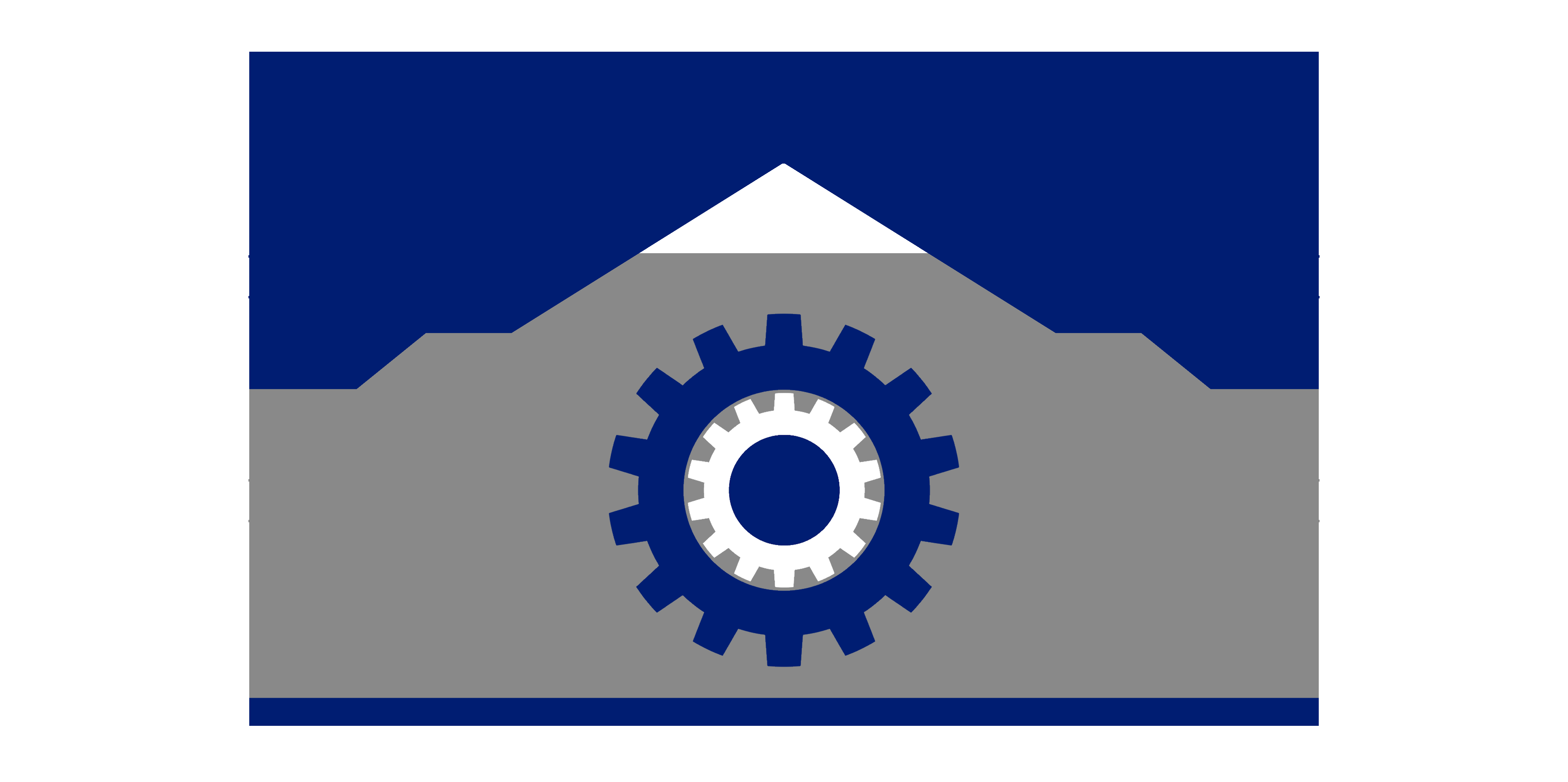
The Disunion of the West does not have an official fleet other than the “Steel Mountains” defensive squadron known as the “Steel Fleet”. Their ships are finished in an unpainted, polished steel look with only the individual ship names and insignias shown on their hulls. This fleet is a first line of defense should anyone attempt to attack the underground factory fortress known as the Steel Mountain Complex.
Pirates and Mercenaries
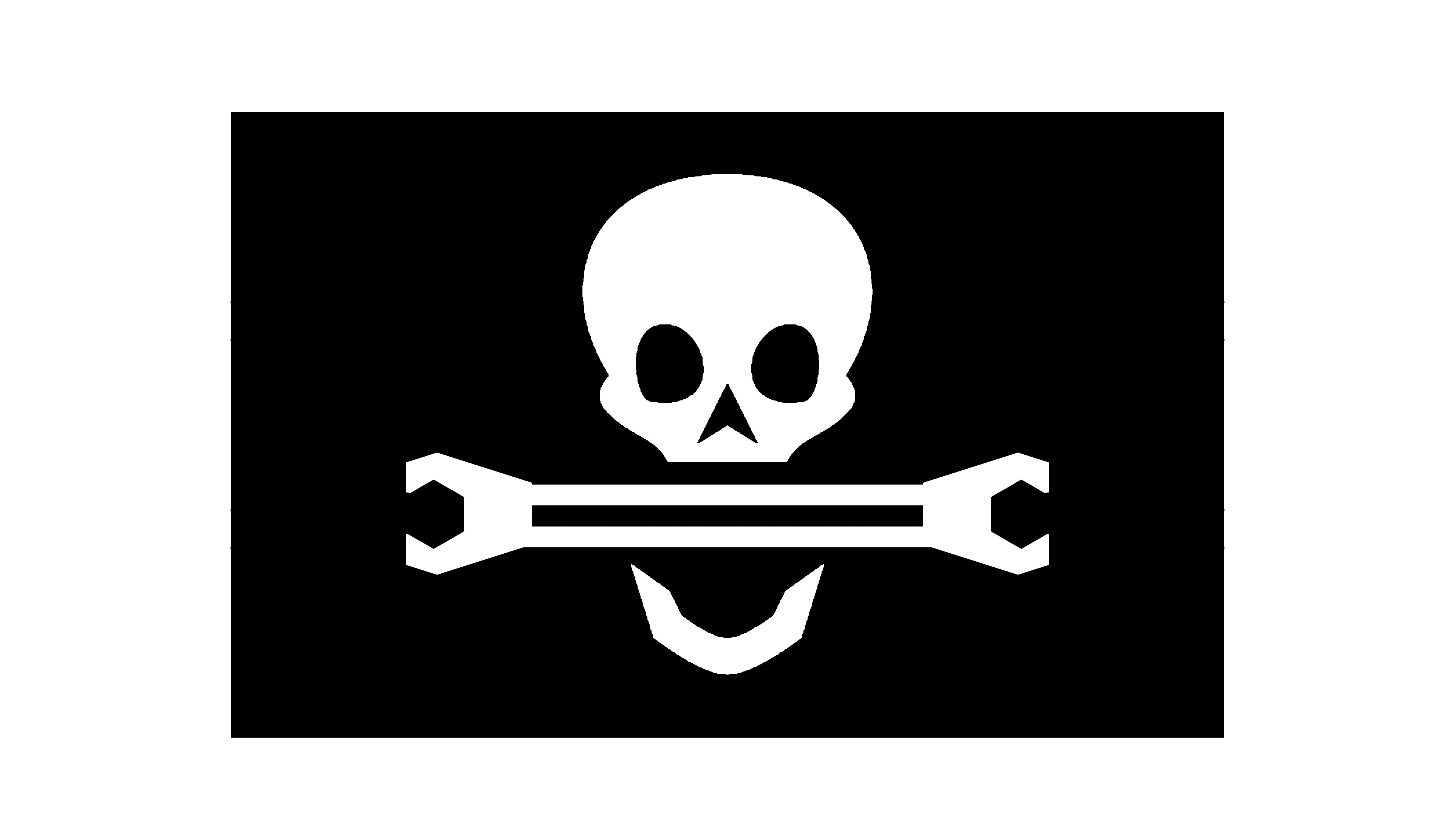
The only other major military powers in this region are the numerous air pirate groups. Functioning with stolen and captured ships as well as older, less-seen aircraft designs, there is no specific template or doctrine that forces are based on. Some are converted civilian airships, while others are composed mostly of aircraft with a single larger mothership to operate from. Pirates and small mercenary fleets highlight the “Wild West” mindset, as anything goes.
Cemānáhuac: El Quinto Sol
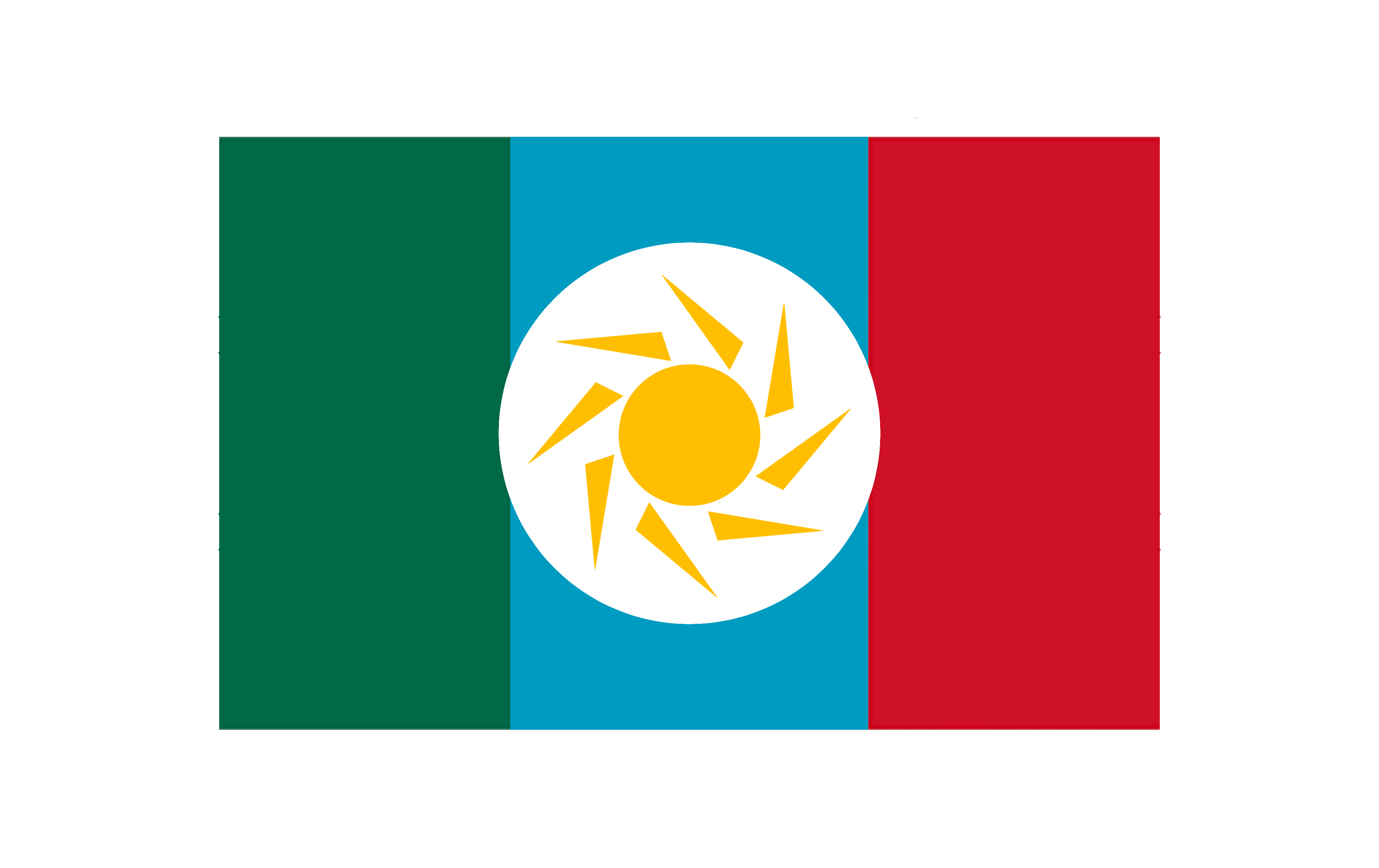
Claiming to be the entire world, yet still called Mexico by non-Spanish speakers, this neo-Aztec empire blends what it sees as the best of Mexico with the best of the native history. As the United States fell, they marched south, liberating nations and stopping at the Panama Canal to prevent drawing too much attention from the north. This didn’t stop the newly formed Republic of Greater Texas from raiding across the Rio Grande; this led to a northern expedition attempting to retake parts of Mexico lost in the Mexican-American War. This conflict continued until the Texan and Pacific Coast airships blasted them back, leading to a loss of territory. Airship-wise, Cemānáhuac lacks the ability to produce large numbers, utilizing some captured ships from previous wars with the north and a few older assets bought from the British. They are accelerating their ability to produce native designs, with their first Light Cruisers already taking to the skies.